Choosing between engineered wood and laminate flooring depends on your budget, interior style, maintenance preferences, and how you use each room. Both options offer attractive wood-look finishes, but they differ in construction, durability, moisture resistance, repair options, and long-term value.
If you are comparing flooring for a villa, apartment, or office in Dubai, understanding these differences will help you select a floor suited to your space and lifestyle.
What Is Engineered Wood Flooring?
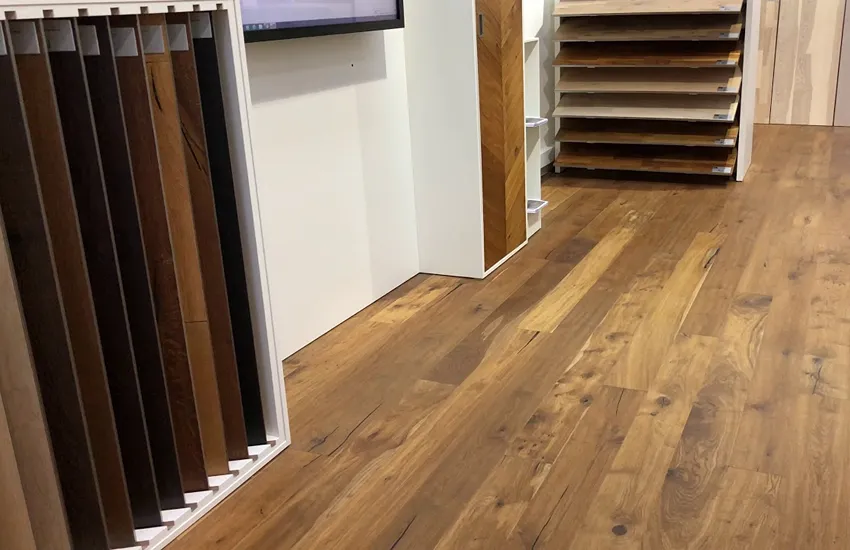
Engineered wood flooring features a real wood surface layer bonded to a core made from multiple layers of wood or wood-based material. This layered construction helps improve dimensional stability compared with many solid wood boards, while the top layer retains the natural grain and texture of real timber.
Engineered wood is available in a variety of wood species, colours, plank widths, and finishes. It suits interiors where natural materials and an authentic timber appearance are priorities.
Explore our range of engineered flooring in Dubai to find options for your home or commercial interior.
Key Features of Engineered Wood Flooring
- Real wood surface: Provides natural grain patterns and timber character.
- Layered construction: Helps improve stability as indoor temperature and humidity change.
- Refinishing potential: Some products allow sanding and refinishing, depending on the thickness of the real wood layer.
- Premium appearance: Complements contemporary, classic, and luxury interior designs.
- Care requirements: Needs suitable cleaning products and protection from standing water, scratches, and excessive moisture.
What Is Laminate Flooring?
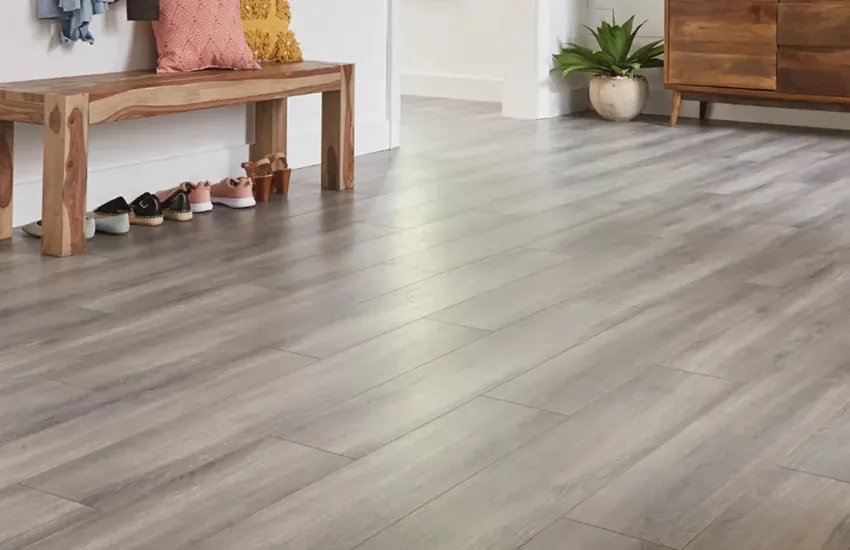
Laminate flooring is a multi-layer synthetic flooring product designed to replicate the appearance of wood, stone, or other decorative surfaces. It typically includes a protective wear layer, a printed decorative layer, a high-density fibreboard (HDF) core, and a balancing layer.
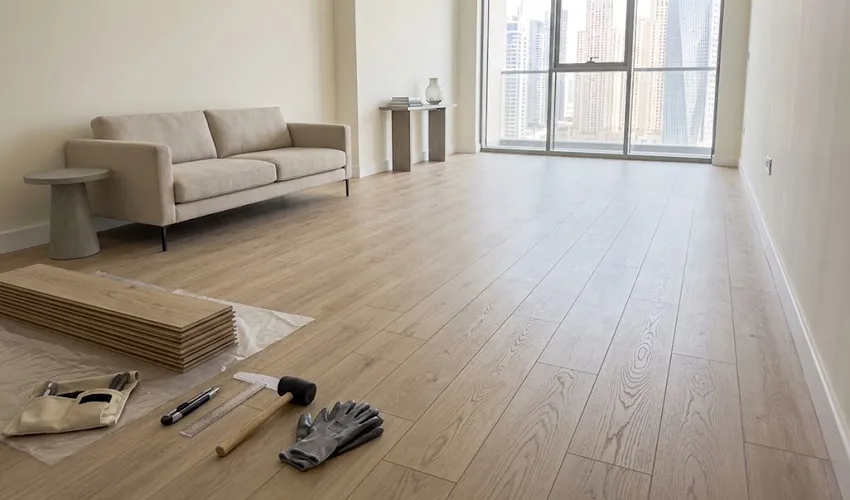
Many laminate floors feature a click-lock installation system, allowing planks to connect without being glued directly to the subfloor. Installation requirements depend on the product, underlay, and subfloor conditions.
Laminate is popular with homeowners who want a wood-look finish at a practical price. It is available in various shades, including light oak, dark brown, grey, and glossy finishes.
Browse our glossy laminate flooring supplier collection in Dubai to explore finishes for different interior styles.
Key Features of Laminate Flooring
- Wood-look designs: Printed patterns reproduce the appearance of different timber species.
- Protective wear layer: Helps resist everyday surface wear and minor scratches, depending on the product rating.
- Practical pricing: Often costs less than engineered wood flooring.
- Click-lock options: Many products use interlocking planks for installation.
- Straightforward cleaning: Usually needs regular sweeping or vacuuming and a lightly damp mop when permitted by the manufacturer.
- Limited repair options: Damaged boards are generally replaced rather than sanded and refinished.
Also read: Laminate flooring installation method
Engineered Wood vs Laminate Flooring: Main Differences
Both flooring types offer attractive finishes, but their materials and performance differ. Use the comparison below to narrow down your options.
| Feature | Engineered Wood Flooring | Laminate Flooring |
|---|---|---|
| Surface material | Real wood veneer or wear layer | Printed decorative layer |
| Appearance | Natural timber grain and variation | Wood-look pattern with consistent designs |
| Initial cost | Generally higher | Generally lower |
| Scratch resistance | Depends on the wood species and finish | Depends on the protective wear layer |
| Moisture resistance | Sensitive to excess moisture | Standard products are vulnerable to moisture at joints and core |
| Refinishing | Possible with some products | Not designed for sanding and refinishing |
| Board replacement | Possible, depending on installation | Possible, depending on the locking system and installation |
| Maintenance | Requires wood-appropriate care | Usually straightforward routine cleaning |
| Best suited for | Interiors prioritising real wood character | Budget-conscious spaces needing a wood-look finish |
Actual performance depends on the product’s construction, surface finish, installation method, and care instructions.
1. Appearance and Style
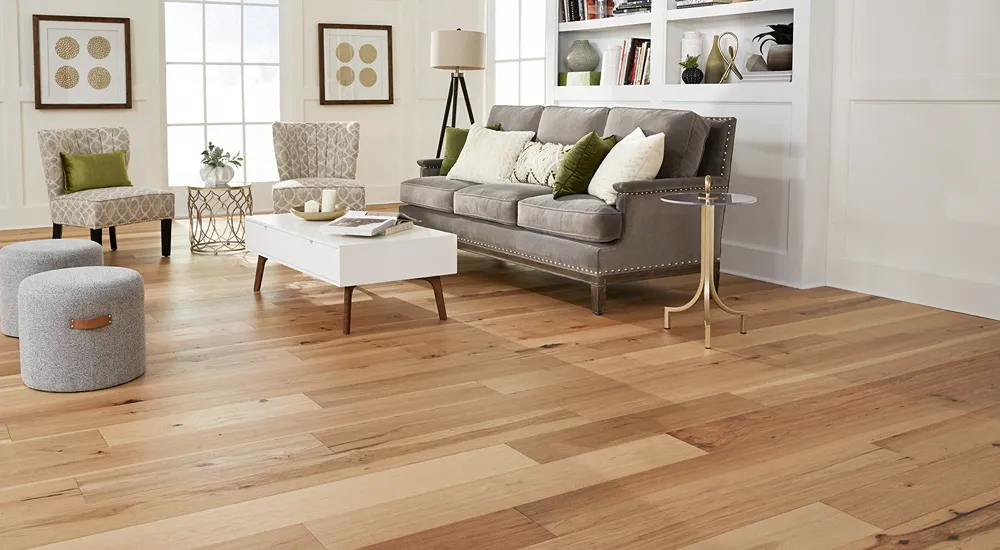
Engineered wood flooring has a real timber surface, so each plank has natural grain patterns, tonal variations, and wood characteristics. It is a strong choice for living rooms, bedrooms, and interiors where authentic wood is an important design feature.
Laminate flooring uses a printed design to recreate wood. Modern designs offer a wide selection of colours and patterns, making it easier to coordinate the floor with furniture, wall colours, and cabinetry. Glossy laminate finishes also suit interiors where a polished, reflective appearance is preferred.
Which looks better? Choose engineered wood for natural timber character. Choose laminate if you want more design variety at a generally lower price.
2. Cost and Long-Term Value
Laminate flooring is generally the more budget-friendly option. It suits renovation projects where you want to refresh the appearance of a room without the higher initial cost often associated with real wood surfaces.
Engineered wood usually requires a larger initial investment because it has a real wood surface. Its long-term value depends on the product quality, wear layer, maintenance, and whether the floor suits your plans for the property.
When comparing quotations, look beyond the price per square metre. Include underlay, subfloor preparation, installation, trims, skirting, and any additional work needed for doorways or transitions.
3. Durability and Scratch Resistance
Laminate flooring often performs well in busy households because its protective top layer helps resist everyday scuffs and minor scratches. However, resistance varies by product. Check the wear rating and manufacturer specifications before choosing flooring for high-traffic areas.
Engineered wood flooring is durable when installed and maintained correctly, but its real wood surface may scratch or dent. The finish, wood species, and plank construction all affect its performance.
Use furniture pads beneath chairs and tables, clean up spills promptly, and place suitable mats at entrances to reduce dirt and surface wear.
4. Moisture Resistance in Dubai Homes
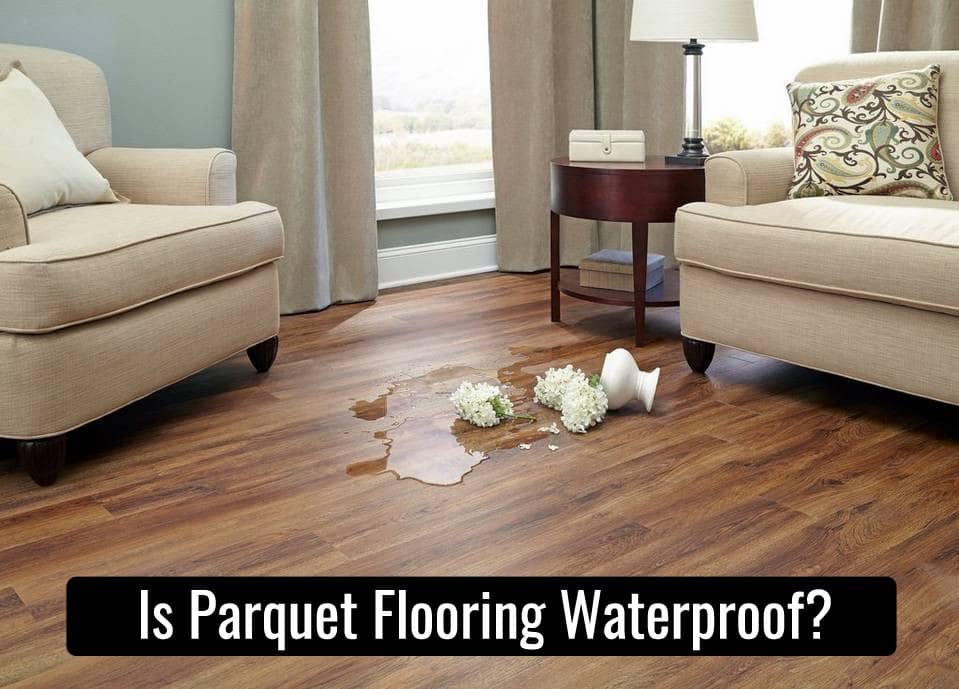
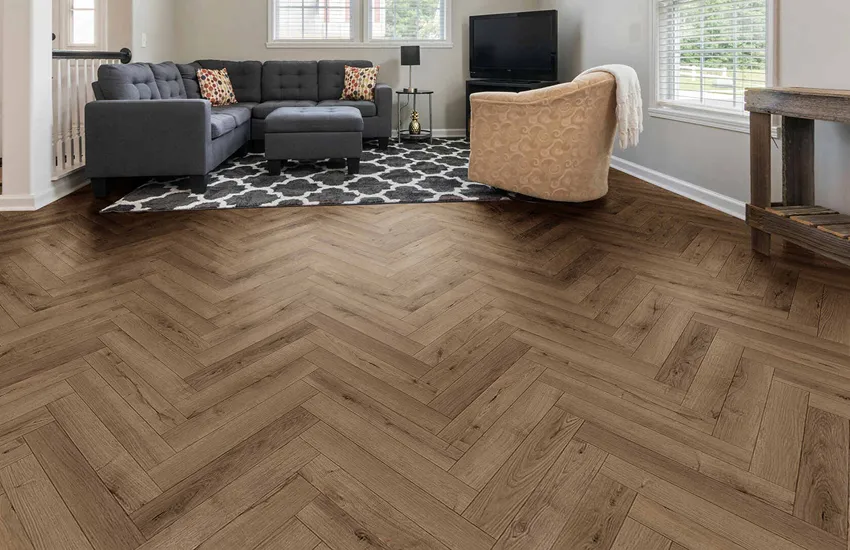
Dubai’s indoor environments may involve air conditioning, changing humidity levels, and occasional spills. Neither standard engineered wood nor standard laminate should be treated as waterproof.
Engineered wood has a layered structure, but prolonged exposure to moisture can still cause damage, swelling, or movement. Laminate is also vulnerable, particularly when water reaches joints or the HDF core.
For kitchens, entryways, and other areas exposed to spills, review the manufacturer’s moisture guidance and select a product specifically rated for the intended conditions. Follow the required expansion gaps and installation instructions. Avoid leaving standing water on either flooring type.
5. Installation and Subfloor Preparation
Many laminate flooring products use a click-lock system. The subfloor must be clean, dry, and level within the manufacturer’s tolerances. A suitable underlay may be required, depending on the product.
Engineered wood installation methods vary. Some products are installed as floating floors, while others are glued or fixed using an approved method. The correct approach depends on the board design, subfloor, and manufacturer’s instructions.
Professional installation helps address subfloor irregularities, expansion requirements, doorway transitions, and finishing details. Incorrect preparation can affect the appearance and performance of either floor.
6. Maintenance and Cleaning
Both options need regular care, but the cleaning products and methods should match the flooring surface.
For laminate flooring:
- Remove dust and grit with a soft broom or suitable vacuum.
- Use a lightly damp mop only when permitted by the manufacturer.
- Avoid excess water and abrasive cleaners.
- Wipe up spills promptly.
For engineered wood flooring:
- Sweep or vacuum regularly to remove abrasive dirt.
- Use a wood-floor cleaner suitable for the finish.
- Avoid soaking the surface or using a steam cleaner unless the manufacturer specifically approves it.
- Use protective pads beneath furniture and maintain suitable indoor conditions.
Always follow the care instructions supplied with your flooring.
7. Which Flooring Is Better for Each Room?
The best choice depends on the room’s use, exposure to moisture, and the look you want to achieve.
Living rooms: Engineered wood suits interiors where natural timber is a priority. Laminate is a practical alternative for households seeking a wood-look design at a lower initial cost.
Bedrooms: Both options work well when the product is suitable for the subfloor and intended use. Engineered wood offers natural texture, while laminate provides a wide range of decorative finishes.
Apartments and rental properties: Laminate is often attractive for budget-conscious renovations. Consider the expected traffic, maintenance needs, and replacement costs before deciding.
Villas: Engineered wood works well in carefully maintained living spaces where natural materials are preferred. Laminate is worth considering when design flexibility and initial cost are key factors.
Kitchens and moisture-prone areas: Check the product’s specific moisture rating before choosing either material. For areas with frequent water exposure, compare flooring options designed for those conditions.
Engineered Wood vs Laminate Flooring: Pros and Cons
Engineered Wood Flooring
Pros
- Real wood surface with natural grain.
- Offers a premium timber appearance.
- Some products allow refinishing.
- Available in different wood species and finishes.
Cons
- Usually costs more upfront.
- Can scratch, dent, or suffer moisture damage.
- Refinishing depends on the thickness of the wood layer.
- Requires suitable cleaning and maintenance.
Laminate Flooring
Pros
- Generally more affordable.
- Offers a broad choice of wood-look designs.
- Protective wear layers help resist everyday surface wear.
- Many products use convenient click-lock systems.
Cons
- Does not have a real wood surface.
- Standard products are not waterproof.
- Damaged areas usually need board replacement.
- Appearance and performance vary by product quality.
Frequently Asked Questions
Is engineered wood better than laminate flooring?
Engineered wood is a strong choice when you prefer a real wood surface and natural timber character. Laminate is often better for shoppers prioritising lower initial cost and a broad range of wood-look designs. The right option depends on your budget, room conditions, and maintenance preferences.
Is laminate flooring more durable than engineered wood?
Laminate’s protective wear layer often provides good resistance to everyday surface scratches. Engineered wood can also last for many years with suitable care, but the real wood surface may scratch or dent. Product specifications and maintenance strongly influence durability.
Can engineered wood flooring be refinished?
Some engineered wood floors are suitable for sanding and refinishing, while others are not. The decision depends on the thickness of the real wood layer and the manufacturer’s guidance. Confirm these details before purchasing.
Is laminate flooring waterproof?
Standard laminate flooring is not waterproof. Some products offer improved water resistance, but performance depends on the design and installation. Follow the manufacturer’s instructions and clean up spills promptly.
Which flooring is more affordable in Dubai?
Laminate flooring is generally less expensive upfront than engineered wood. Your final cost depends on the selected product, floor area, subfloor preparation, underlay, installation, and finishing materials.
Which flooring is suitable for apartments in Dubai?
Both options suit many apartments when the product and installation method match the room’s requirements. Laminate is often selected for cost-conscious renovations, while engineered wood suits interiors where a real timber surface is preferred.
Final Verdict: Engineered Wood or Laminate?
Choose engineered wood flooring if you value the natural appearance of real timber and want a floor with the potential for refinishing, depending on its construction. Choose laminate flooring if you prefer a generally lower upfront cost, a wide range of decorative designs, and straightforward routine care.
Before buying, compare product specifications, moisture guidance, installation requirements, and total project costs. The right flooring is the option suited to your property, daily use, and long-term plans.