
Choosing engineered wood flooring is a great way to bring the natural beauty, warmth, and timeless appeal of real wood into your space. Its attractive finish and practical construction make it a suitable flooring option for different interiors, from modern apartments to spacious villas. If you are exploring engineered wood flooring in Dubai, selecting the right product is only the first step. Proper installation also plays an important role in achieving a smooth, stable, and long-lasting finish.
Before getting started, you need to understand the different installation methods, prepare the subfloor, and gather the required tools and materials. This guide explains four common methods of engineered wood flooring installation, along with practical steps to help you understand the process.
How to Lay Engineered Wood Flooring Step by Step
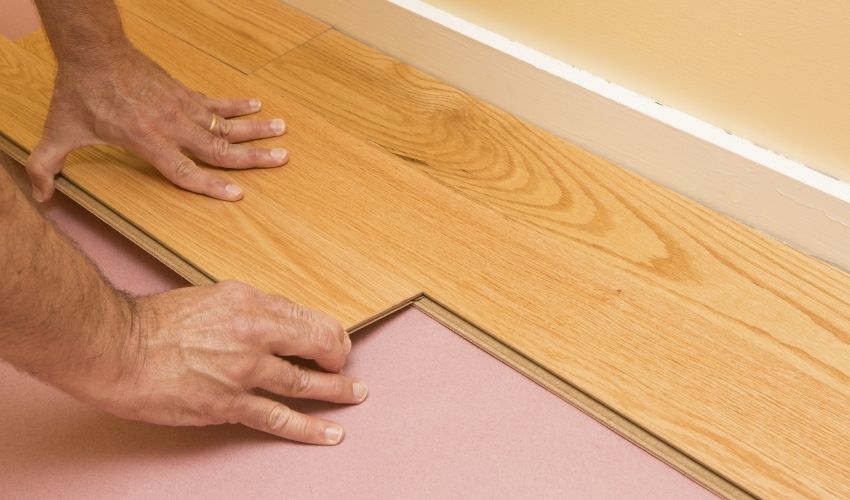
Installing engineered wood flooring can be a DIY project, but you must be aware of each and every detail for its installation. That includes methods for installation, effective techniques, and related tools that are required. This guide will cover 4-methods to install engineered wood flooring. Let’s check them out!
Methods of Installing Engineered Wood Flooring
Floating Engineered Hardwood Flooring
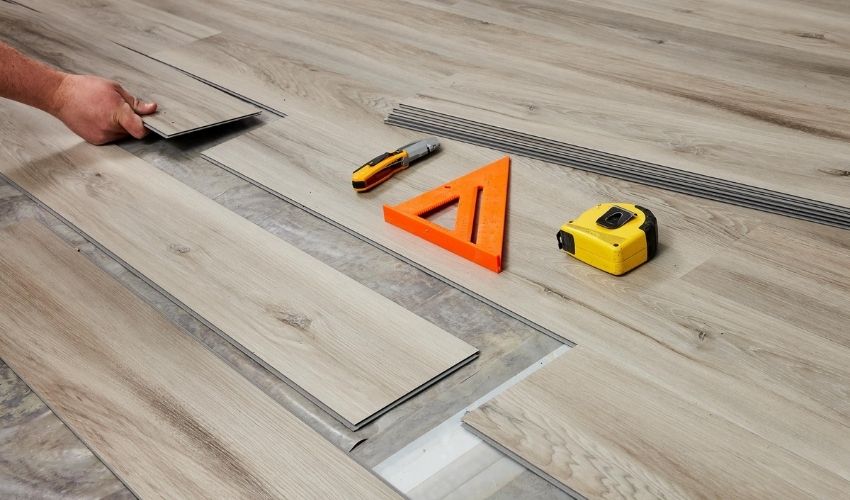
The first method for installing engineered wood flooring is the floating method. Before you start with this method, you must consider preparing your subfloor first. That includes clearing up all the dust and debris, being sure it is clean and smooth.
Moreover, consider adding underlayment and laying out spacers to maintain the expansion gap between the wood planks. After that, you begin with the steps. Check them out!
Step 1: Start with insulating your first row by gluing down the ends of planks and the tongue facing the middle of the room.
Step 2: Consider installing other rows by applying glue to the tongue and grooves and fixing them effectively together & tapping the new pieces. Be sure to wipe out any glue popping out of the planks.
Step 3: Leave a specified expansion gap on the wall side and then install the final row by perfectly fixing the planks.
Step 4: The tape is applied to avoid any type of foot traffic on newly installed flooring. Remove the tape after 24hours, when the floor is ready to walk on.
Step 5: After installing wood flooring, consider removing the spacers and adding transition pieces. After that, nail the baseboards and some molding to the wall.
Glue-Down Engineered Wood Flooring Installation

Another effective & Easy method of installation. Let’s check out how it works.
- Step 1: Consider setting up an expansion gap that is necessary for methods.
- Step 2: Go apply base glue all around the room.
- Step 3: Consider spreading the glue to the whole area.
- Step 4: Install your first row with the baseline you prepared & make sure the tongue should face the middle of the room.
- Step 5: Install the second row by fixing the tongue of the first and grooves of the second row altogether.
- Step 6: Make sure to fix the end perfectly & keep installing the other rows until the end.
- Step 7: At the end, cut the final board and fit them to the floor by leaving a gap to the wall side.
- Step 8: The last step would be the same. Install transition pieces and remove spacer & you are done with your floor installation.
Nail-Down and Staple-Down Installation
The floor must be prepared well for this method too. Every Method for installing engineered wood flooring needs the same spacer around the room for expansion gaps.
- Step 1: In this method, your first row must be installed after adding some finishing nails to hold the first row and work as a spacer, too. You need to fill that with some wood filler.
- Step 2: Now consider adding another row by driving your staple every 3 to 4 inches at an angle 45-degree. This must be just up to the tongue of the plank. Be sure the staple must not disturb the tongue and groove fixing.
- Step 3: Securing the last row would be the same as the first row. You need to use pre-drill planks and then put nails to fix them. Afterward, fill the nail holes with wood filler because the pneumatic stapler will not work in small spaces.
- Step 4: So, this will be the same, remove the spacers, install the transition pieces. Fix the baseboards or shoe molding to finish the floor.

Installing a Nail-down Engineered Hardwood Floor
This is a much identical method to the last method we discussed, which is staple-down engineered wood installation. Note that the subfloor preparation would be the same. This is necessary for the perfect installation of the floor. Let’s find out how this method works!
- Step 1: In this method, for the first row, you are supposed to use pre-drilled planks. The tongue of them must face the center of the room. Pre-drilling & nailing secure your floor and avoid any crack or scratch on it while making your job easy. You just need to fix the nails and fill the nail holes with some good wood fillers.
- Step 2: For the nest rows, here you need to use a pneumatic nail gun. Drive the nails on the planks above the tongue. Be sure to countersink the nails in the right way so that they don’t disturb the fixing of the tongue and grooves of the other rows.
- Step 3: The last row would be the same as the first one. Add pre-drilled planks and insert nails afterward. Make sure to keep a bit of distance from the wall.
- Step 4: Once the installation is complete, consider removing the spacer and fixing transition pieces. Add the baseboards and shoe molds for perfect floor finishing.
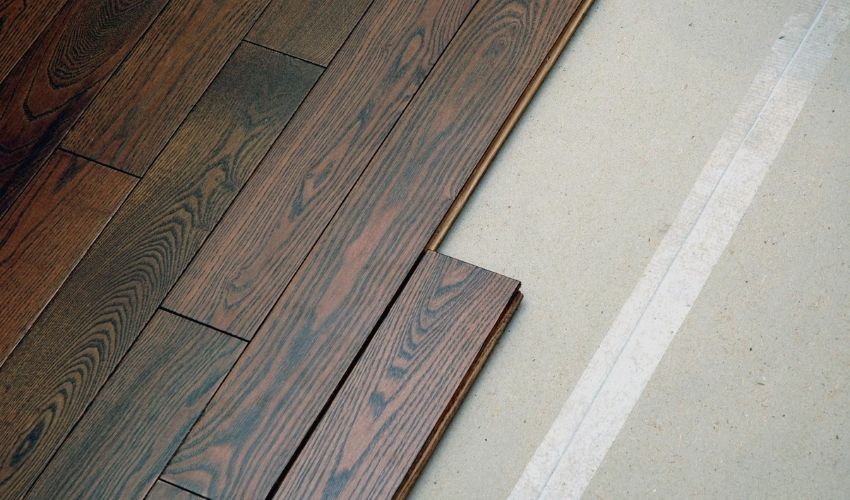
How to Fit Engineered Wood Flooring Over Different Subfloors
The type and condition of your subfloor play an important role in engineered wood flooring installation. Before laying the planks, check that the surface is clean, dry, level and structurally sound. Different subfloor materials require specific preparation and installation methods to achieve a stable finish.
1. Concrete Subfloors
Concrete subfloors are common in apartments and villas. Before installation, check the concrete for moisture and uneven areas. Allow newly laid concrete to cure fully and use a suitable moisture barrier or primer where the flooring manufacturer’s instructions require it.
You can install engineered wood flooring over concrete using a floating or glue-down method, depending on the product’s specifications. For floating installations, use a compatible underlay. For glue-down installations, select an adhesive approved for both the engineered wood and concrete surface.
2. Plywood Subfloors
Plywood provides a suitable base for engineered wood flooring when it is securely fixed and level. Check for loose boards, raised screws, damaged sections and uneven joints. Repair these areas before starting the installation.
You can use floating, glue-down or mechanical fixing methods, depending on the flooring system. If you choose a nail-down or staple-down method, check the plywood thickness and follow the manufacturer’s fixing requirements to ensure proper grip.
3. Existing Wooden Floorboards
You can install engineered wood flooring over existing floorboards if they are stable, dry and in good condition. Inspect the boards for movement, squeaking, loose fixings and signs of moisture damage. Secure any loose sections and replace damaged boards before proceeding.
For a floating installation, make sure the existing floor provides a flat and stable base. You might also need an approved underlay. If you plan to glue or mechanically fix the new flooring, check whether the existing boards are suitable for the selected installation system.
4. Chipboard Subfloors
Chipboard is another possible base for engineered wood flooring, provided it is structurally sound, dry and level. Check for swollen edges, damaged areas and loose panels before installation. Replace sections affected by moisture or deterioration.
Floating installation is often a suitable option when the flooring manufacturer approves the chipboard substrate. For glue-down or mechanical fixing, check the adhesive and fixing requirements first. Avoid installing flooring over weak or damaged chipboard, as movement in the base can affect the finished floor.
Common Engineered Wood Flooring Installation Mistakes
Even quality engineered wood flooring requires proper preparation and installation. Small errors during the process can lead to uneven surfaces, gaps, movement and other problems. Keep the following mistakes in mind before starting your project.
1. Skipping Subfloor Preparation
Installing flooring over an uneven, dirty or damaged surface often leads to movement and an inconsistent finish. Always inspect the subfloor before laying the planks. Remove dust, repair damaged sections and level uneven areas using suitable materials.
2. Ignoring Moisture Levels
Excess moisture in the subfloor or surrounding environment can affect engineered wood flooring. It might cause swelling, gaps or other installation problems. Test the subfloor moisture before installation and follow the manufacturer’s moisture limits. Use an approved moisture barrier where required.
3. Forgetting Acclimatisation
Engineered wood flooring needs to adjust to the room’s environmental conditions according to the manufacturer’s instructions. Installing the planks without following the recommended acclimatisation procedure might lead to dimensional changes after installation. Check the product guidelines for the correct storage conditions and acclimatisation period.
4. Leaving Insufficient Expansion Gaps
Wood flooring needs room for natural expansion and contraction. Fitting the planks tightly against walls, door frames or fixed objects might cause the floor to lift or buckle. Leave the expansion gaps specified by the manufacturer around the room’s edges and other fixed structures.
5. Using the Wrong Adhesive or Underlay
Different engineered wood flooring products require different installation materials. Using an incompatible adhesive or underlay might affect bonding, stability and floor performance. Always choose products recommended by the flooring manufacturer and check their compatibility before installation.
6. Incorrectly Aligning the Flooring Planks
Poor plank alignment creates uneven joints and an untidy appearance. Start with a straight reference line and check the first row carefully. Stagger the end joints according to the manufacturer’s recommendations, and maintain consistent spacing throughout the installation.
7. Choosing the Wrong Installation Method
Not every engineered wood flooring product supports floating, glue-down, nail-down or staple-down installation. Choosing an unsuitable method might affect the floor’s stability and performance. Check the product specifications before selecting an installation technique.
8. Rushing the Installation Process
Hurrying through measurements, cutting and fitting often leads to unnecessary gaps, damaged edges and uneven rows. Take accurate measurements, dry-fit sections where appropriate and check each row before moving forward. Allow adhesives to cure for the specified period before placing furniture or using the floor.
Careful preparation and the correct installation technique help you achieve an attractive and stable engineered wood floor. If you are unsure about subfloor conditions or the right installation method, consult a flooring professional before starting the project.
Wrap Up!
For Installing Engineered Wood Flooring, the above-mentioned methods are the most precisely used methods. The good thing is that all the methods are completely DIY-friendly. You can install the whole flooring by yourself by following any of the listed methods. On the off chance, if you need help from pros, then you can consult experts flooring Dubai.
We hope you’ll surely get assistance as early as possible and your floor will be installed with great perfection. Let us know in the comment section if you have any other queries afterward with floor installation, we’ll hopefully get you covered with everything.